Field Investigation · Reliability · Validation
Waste-Fabric Guide
A production-reliability improvement developed through existing-condition analysis, iterative testing, failure investigation, and FEA.
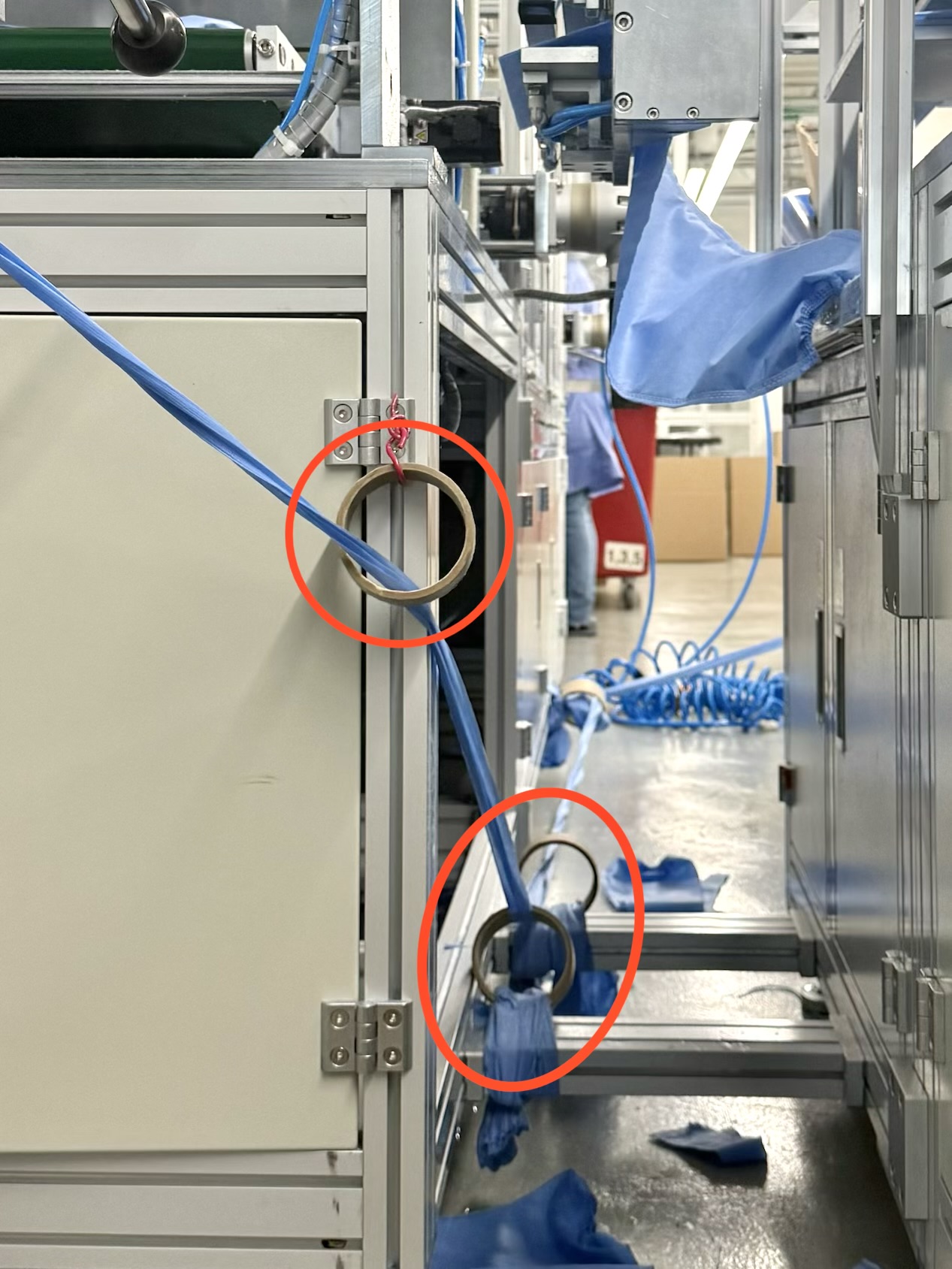
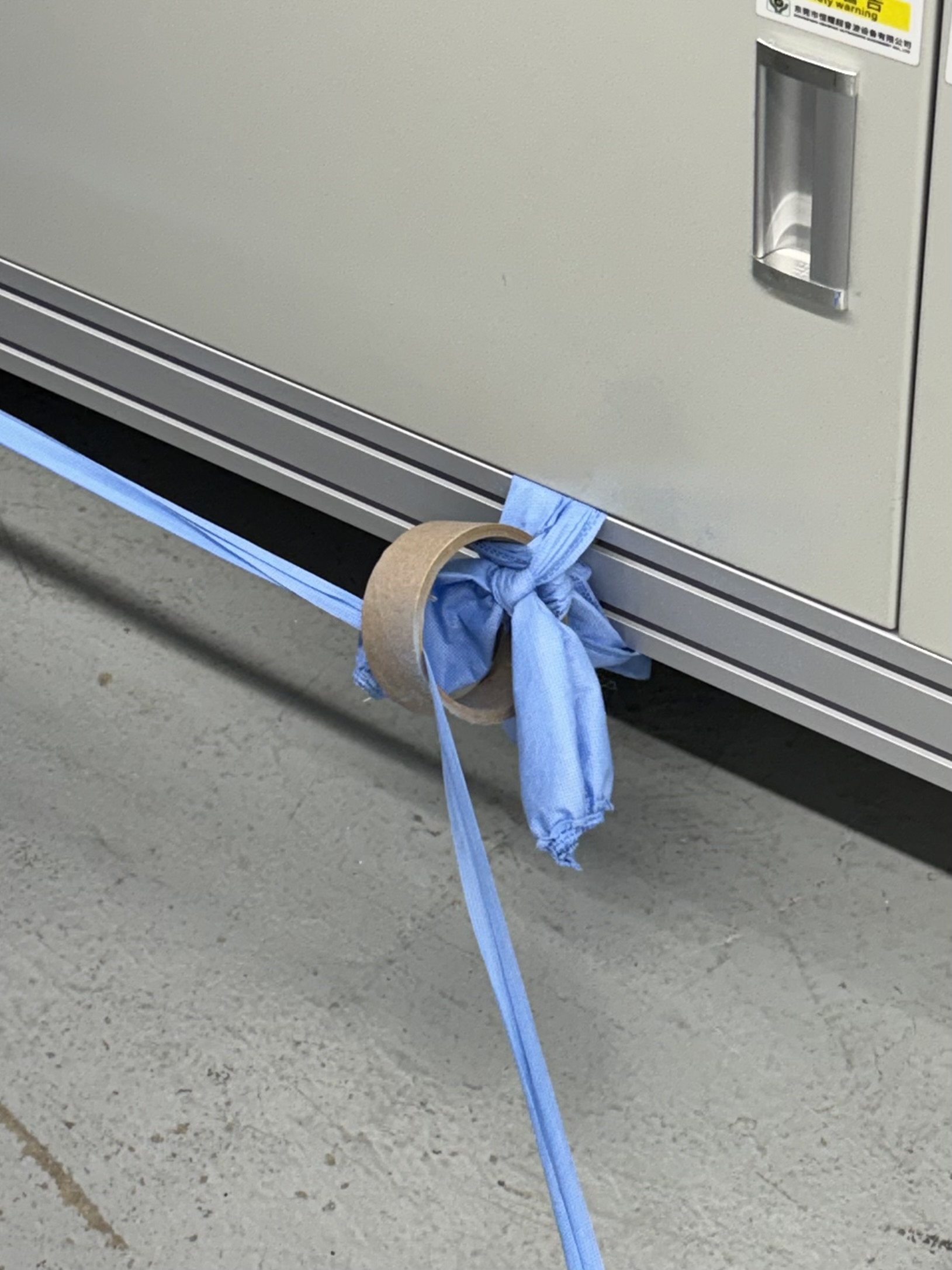
Before: Excess fabric was routed using empty tape rolls attached to the machine frame with tape and fabric.
Existing conditions
Replace an improvised workaround with a repeatable solution.
I began by observing the operating production line and documenting the existing material path. The line generates a continuous strip of excess fabric that must be guided away from moving equipment and toward the waste-collection system. Empty tape rolls attached to the aluminum frame served as temporary guides.
The solution needed to provide repeatable positioning, remain clear of the production path, tolerate continuous tension and intermittent load increases, and allow straightforward installation and maintenance.
- Company
- New York Embroidery Studio
- My role
- Mechanical Engineering Intern
- Methods
- Field observation, Fusion 360, SolidWorks FEA, 3D printing, on-machine testing
Design solution
A custom guide shaped around the actual production path.
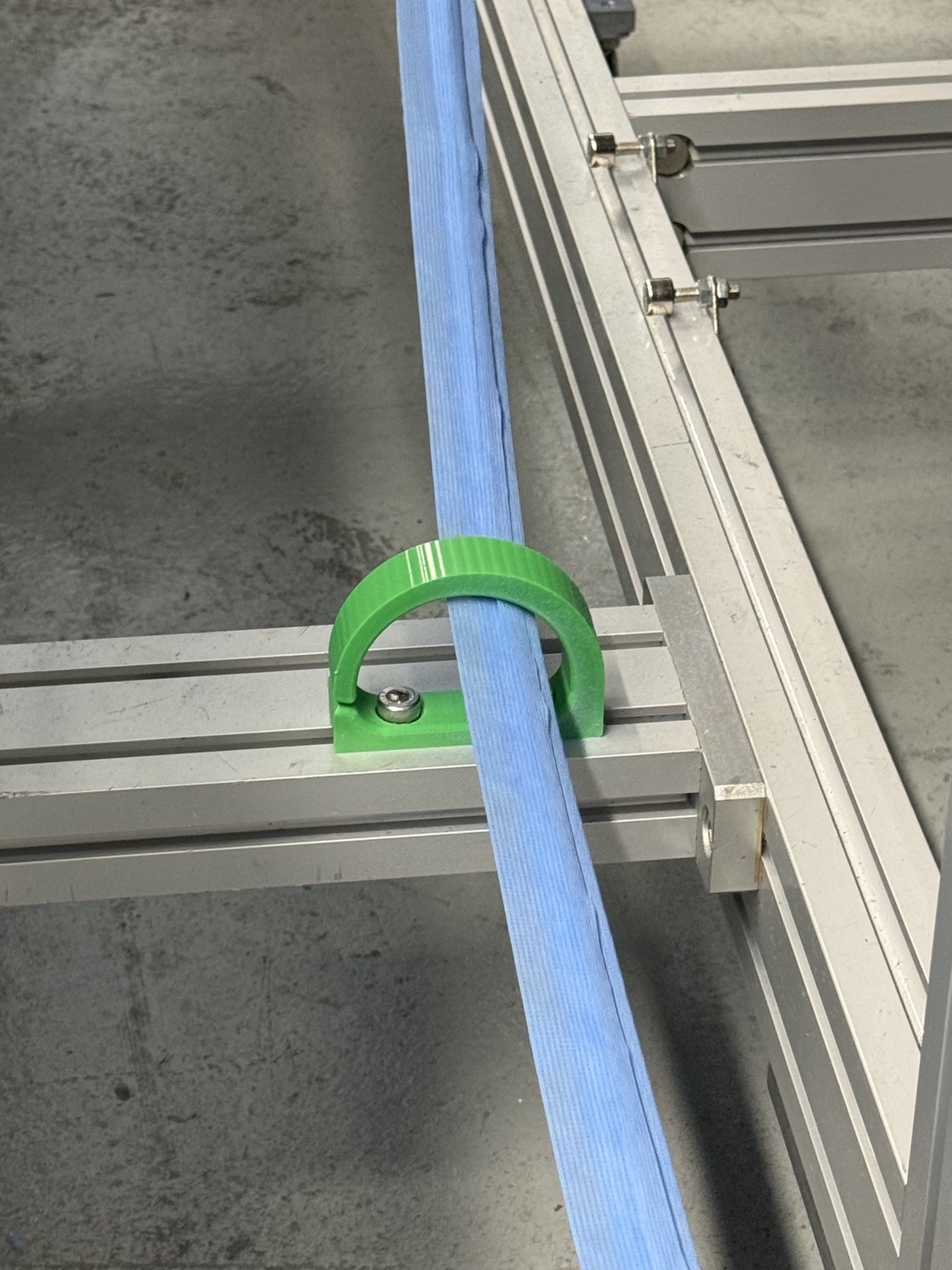
I designed a dedicated fabric guide to replace the empty-roll workaround and direct the moving trim waste along a controlled path toward the collection reel. The design was developed around the machine frame, the direction of fabric travel, and the need to avoid interfering with production.
The component was prototyped through 3D printing and repeatedly evaluated on the operating machine, allowing the design to evolve in response to real production conditions.
CAD model: 360° view of the final guide geometry developed in Fusion 360.
Engineering decision and validation
Turning observed failures into a stronger final design.
Early 3D-printed prototypes chipped or failed because the waste fabric applied continuous tension with intermittent load increases. Rather than treating the failure as a printing defect, I examined where and how each prototype broke and used those observations to identify the load path.
I increased section thickness and reinforced the geometry at the highest-stress locations, then used SolidWorks FEA to compare the revised design under load before returning to physical testing. On-machine evaluation confirmed that the revised geometry better matched the forces present during operation.
This process connected field observation, failure investigation, simulation, CAD refinement, and physical validation—a repeatable approach for improving the reliability of an operating system.